Introduction
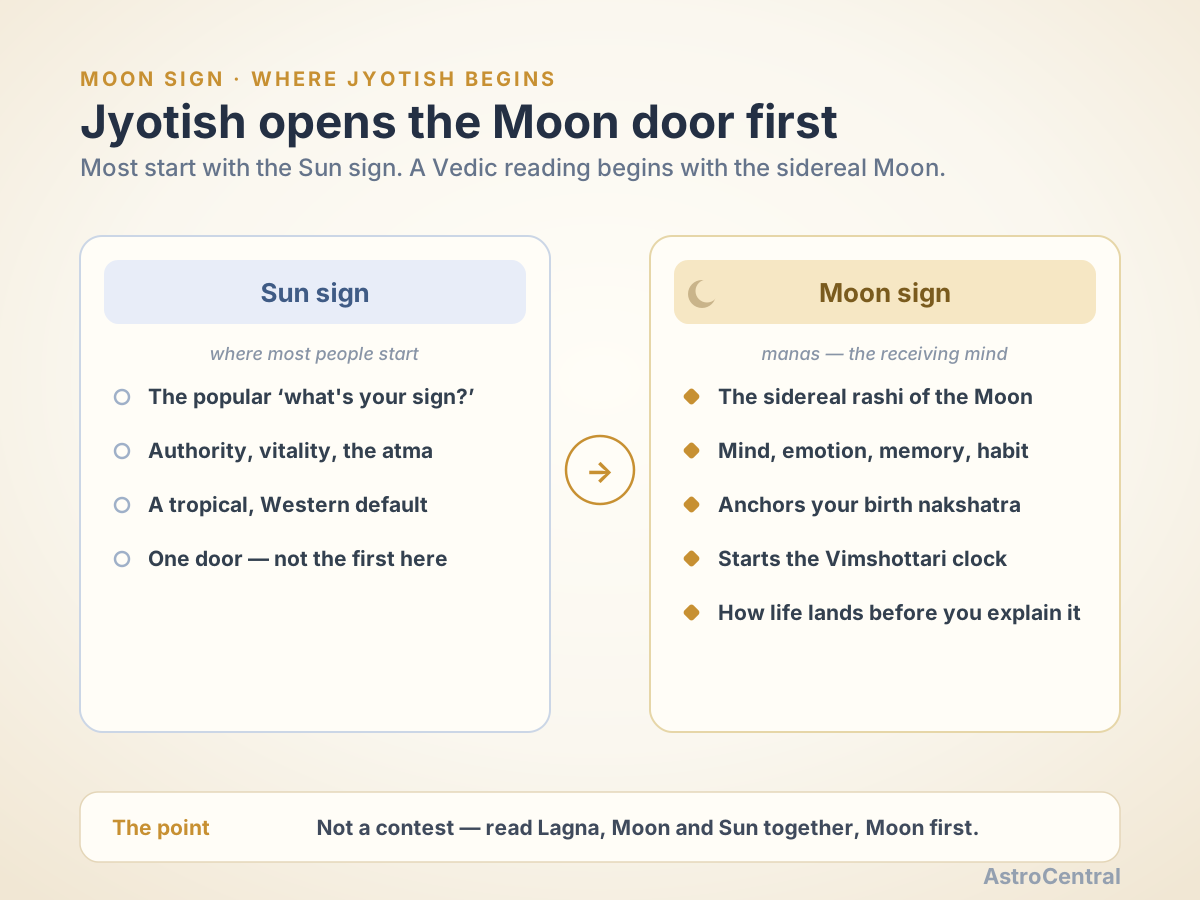
Most people arrive at astrology through their Sun sign. Jyotish asks a different first question: where was the Moon when you were born?
That one shift changes the feel of the whole chart. The Moon is not just a mood symbol in Vedic astrology. It anchors the birth nakshatra, shapes the starting point of Vimshottari dasha, and gives the astrologer a sensitive window into how a person receives life before they explain it.
This does not make the Moon the only important factor. It makes the Moon one of the first doors into the chart.
Plain-English Explanation
Your Moon sign is the sidereal rashi occupied by the Moon at birth. If the Moon is in Taurus in a sidereal chart, your Moon sign is Taurus, even if a tropical Western chart places the Moon somewhere else.
In Jyotish, the Moon is connected with manas: the mind, emotional response, memory, habit, and the way experience lands inside you. That is why many astrologers begin with the Moon when describing everyday temperament.
The Moon also points to your birth nakshatra. That matters because Vimshottari dasha, the most commonly taught timing system in Parashari astrology, starts from the Moon's nakshatra. So the Moon is not only descriptive. It is part of the clock.
What Most People Get Wrong
The common shortcut is: "Your Moon sign is the real you." That sounds neat, but it is still too simple.
The Moon shows how life is received. The Lagna shows the body, path, and chart framework. The Sun shows authority, vitality, and atma themes. A reading becomes stronger when these three are compared rather than ranked like a contest.
How To Check It In Your Chart
- Open a sidereal Vedic chart from reliable software.
- Find the Moon and note its sign.
- Note the Moon's nakshatra and pada if your software displays them.
- Check which house the Moon occupies from the Lagna.
- Read the Moon with its sign, house, nakshatra, dignity, aspects, and dasha context.
If your chart uses a different ayanamsha than another app, the Moon usually stays in the same sign unless it is close to a sign boundary. Near a boundary, verify carefully.
What It May Mean In Real Life
A strong, supported Moon may indicate steadier emotional processing, better receptivity, and a more grounded relationship with daily life. A pressured Moon may show sensitivity, restlessness, or a tendency to absorb the environment quickly.
These are tendencies, not guaranteed outcomes. Family environment, personal habits, therapy, spiritual practice, and ordinary maturity all matter.
What Not To Conclude Too Quickly
Do not judge mental health, marriage, career, or spiritual maturity from Moon sign alone. The Moon needs context from the Lagna, the 4th house, the dasha running, and the planets influencing it.
Astrology can be a screening tool, not a verdict. It can help you ask better questions about rhythm, nourishment, and stress patterns while leaving room for agency.
Practical Application
Use this three-part worksheet:
- Moon sign: what kind of emotional weather does it suggest?
- Moon house: where does that weather show up in life?
- Moon nakshatra: what story or motive colors the Moon's response?
Then compare it with Your Rising Sign (Lagna) and Why Two Astrologers Say Completely Different Things About Your Chart.
Common Misconceptions
- Your Moon sign replaces your Sun sign. It adds a Vedic anchor, but it does not erase the rest of the chart.
- A difficult Moon sign means a difficult life. Strength, aspects, house placement, and dasha timing can change the expression.
- The Moon is only about emotions. It also supports timing through nakshatra-based dasha systems.
Related Concepts
- Your Rising Sign (Lagna) - The framework that shows where the Moon operates.
- How to Actually Read Your Kundli - The practical next step for locating the Moon.
- Why Astrologers Disagree - Why different methods produce different emphasis.
Sources & References
- Brihat Parashara Hora Shastra, Chapter 3 - planetary characters and Moon significations.
- Brihat Parashara Hora Shastra, Chapter 46 - dasha sequence and Vimshottari structure.
- content-drafts/vedic-astrology/shared/JYOTISH-REFERENCE-DATA.md - Moon karaka, dasha sequence, nakshatra rulers.
FAQ
Is my Moon sign more important than my Sun sign?
In Jyotish it is often more immediately useful for temperament and dasha timing, but it is not the whole chart.
Can my Moon sign differ from my Western Moon sign?
Yes. Vedic charts use the sidereal zodiac, so placements can differ from tropical Western placements, especially near sign boundaries.
Does Moon sign predict my personality exactly?
No. It may describe emotional style and receptivity, but the Lagna, house placement, aspects, and dasha context matter.
Why does nakshatra matter?
The Moon's nakshatra gives a finer-grained lunar story and starts the Vimshottari dasha sequence.