
Introduction
Few labels sound as dramatic as Kaal Sarp Dosha. That drama is exactly why the concept needs a calmer reading.
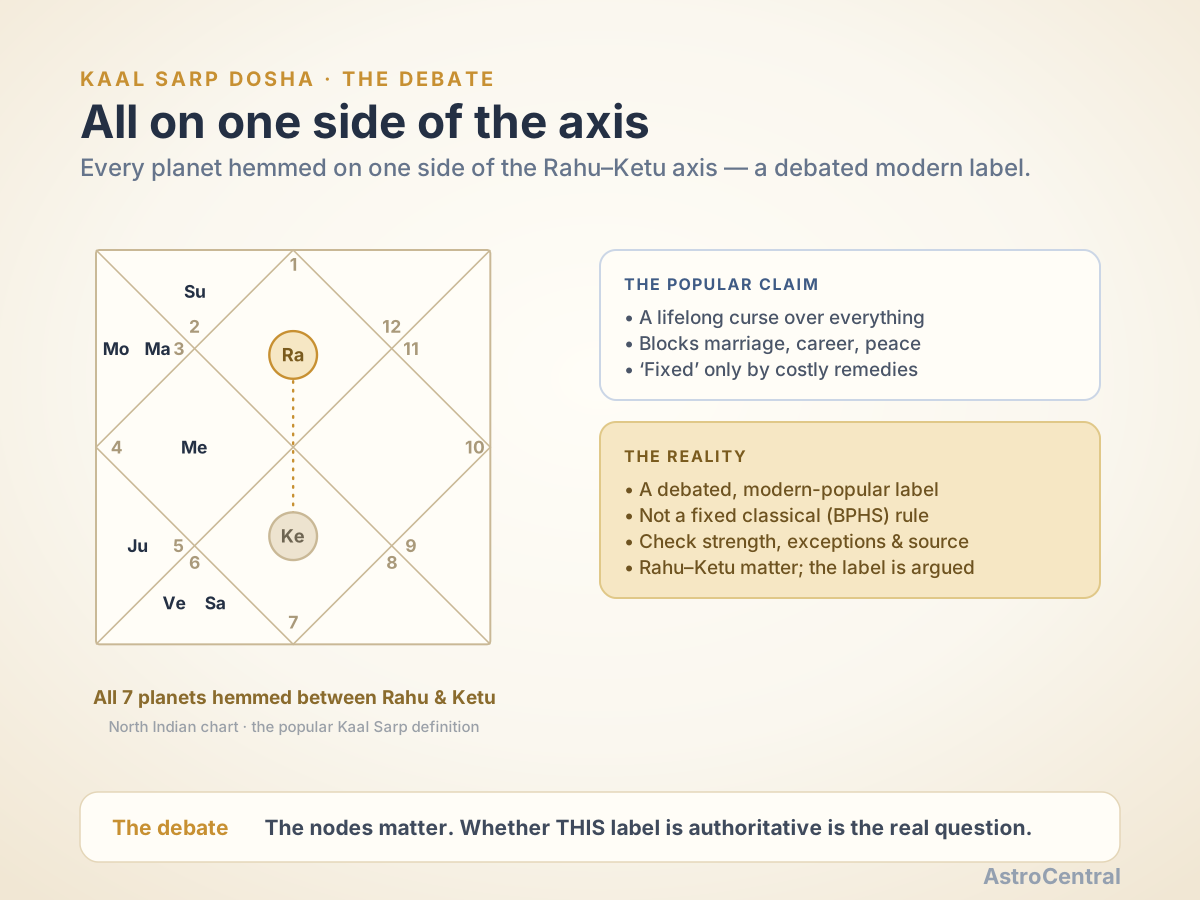
Kaal Sarp Dosha is a debated modern-popular condition involving the Rahu-Ketu axis and planets hemmed on one side.
This article keeps the reading practical: define the condition, check the chart factors, then avoid turning one symbol into a life sentence.
Plain-English Explanation
The popular definition says all planets fall between Rahu and Ketu on one side of the axis. Traditions differ on whether and how strongly to use the label.
Kaal Sarp Dosha is a debated modern-popular condition involving the Rahu-Ketu axis and planets hemmed on one side.
What Most People Get Wrong
The fear-based version treats Kaal Sarp as a life curse without checking strength, exceptions, or source controversy.
The better habit is to slow down and ask what the condition actually requires before naming it in a reading.
How To Check It In Your Chart
- Find Rahu and Ketu.
- Check whether all planets fall on one side of the axis.
- Check exceptions and planets conjunct the nodes.
- Assess Lagna, Moon, dasha, and benefic support.
- Name the tradition using the condition.
What It May Mean In Real Life
A strong nodal enclosure may show intensity, unusual life direction, or recurring pressure around Rahu-Ketu themes. It does not define the whole life.
The lived expression depends on the whole chart, the active dasha, and the person's choices.
What Not To Conclude Too Quickly
Do not call it a curse or use it to frighten people into remedies. Use this as a screening tool, not a verdict, and leave room for agency.
If the topic touches health, marriage, money, parenthood, longevity, or remedies, bring in qualified professional support where the real-world decision calls for it.
Practical Application
- Draw the Rahu-Ketu axis.
- Mark every planet's side of the axis.
- Write what is actually enclosed.
- Check whether the chart has strong balancing factors.
Common Misconceptions
- Kaal Sarp is universally accepted in classical texts. The chart needs fuller context before that claim is useful.
- Everyone with the pattern suffers the same way. The chart needs fuller context before that claim is useful.
- Expensive rituals are the only answer. The chart needs fuller context before that claim is useful.
Related Concepts
- Rahu: The Planet That Does Not Exist - A useful next layer for this topic.
- Why Two Astrologers Disagree - A useful next layer for this topic.
- Remedies in Vedic Astrology - A useful next layer for this topic.
Sources & References
- Brihat Parashara Hora Shastra, Chapter 25 - Rahu and Ketu as non-luminous planets.
- JYOTISH-REFERENCE-DATA.md, Sections 7, 13 - Node aspect variation and Rahu/Ketu karakas.
- Modern Kaal Sarp Dosha practice, (chapter to verify) - Popular condition and interpretive controversy.
FAQ
Is Kaal Sarp Dosha in BPHS?
This article treats the specific popular label as contested and does not present it as a settled BPHS doctrine.
Should I fear the label?
No. It needs context and a calm chart review.
Does the Rahu-Ketu axis matter?
Yes, but the axis is not the whole chart.
Are remedies required?
Do not make remedy decisions from fear or one label.